
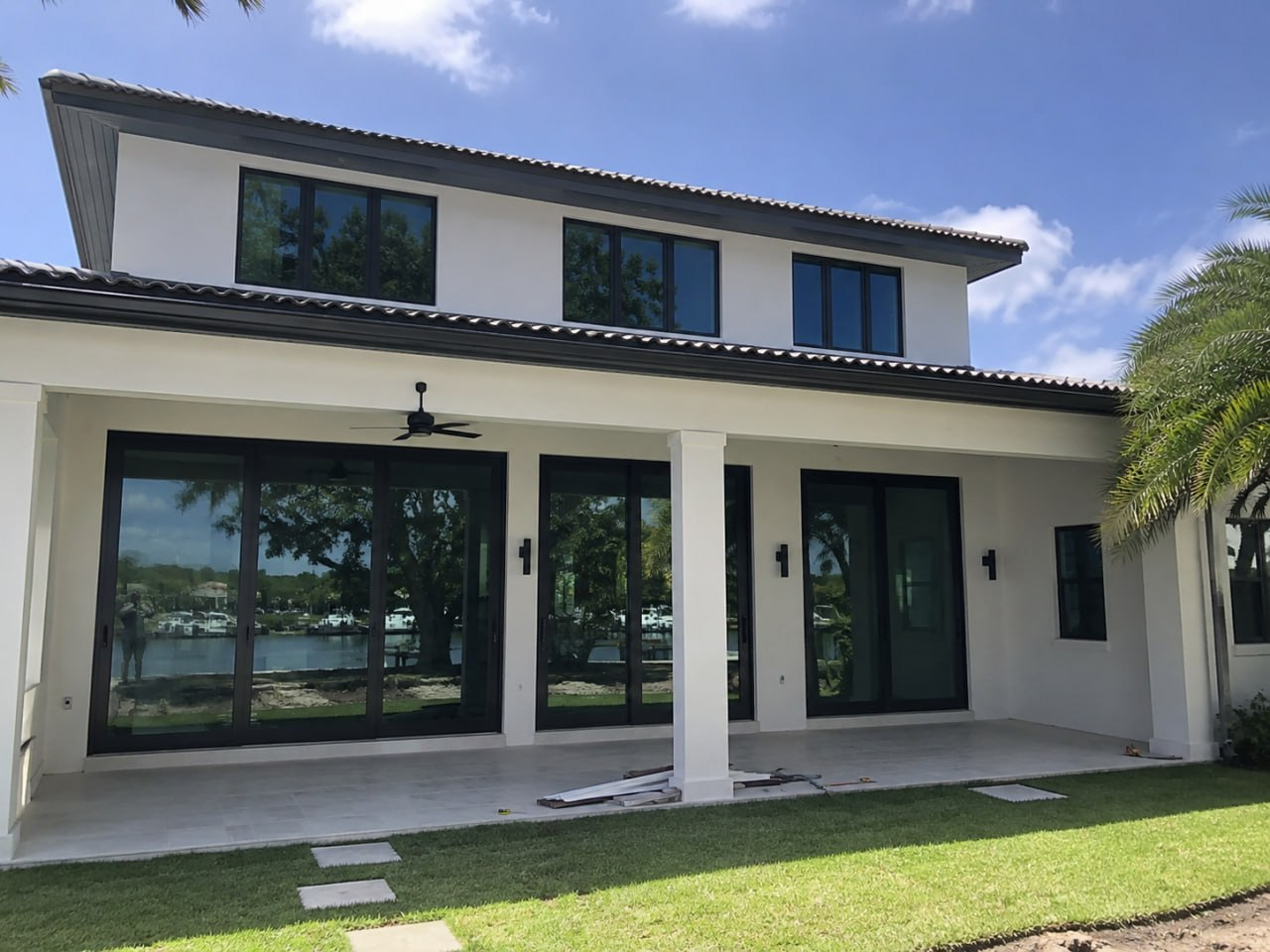
Impact Windows vs. Non-Impact Windows: What Makes Them Different and What Florida Requires
Impact vs. Non-Impact: It's Not Just "Thicker Glass"
Most homeowners think impact windows are just regular windows with thicker glass. That's wrong. The difference between impact and non-impact windows is fundamental — it's in the glass construction, the frame engineering, the hardware, the testing, and the certification. Let's break it all down.
What Makes a Window "Impact-Rated"?
An impact-rated window must survive two tests under Miami-Dade and Florida Building Code standards:
The Large Missile Test
A 9-pound 2x4 lumber is fired from an air cannon at the window at 34 mph (for standard zones) or 50 mph (for High Velocity Hurricane Zones like Miami-Dade). The glass can crack, but the interlayer must hold. No penetration allowed.
The Cyclic Pressure Test
After the missile impact, the same window is subjected to thousands of cycles of positive and negative air pressure simulating sustained hurricane winds. The window must maintain the building envelope — no breach, no blowout.
A regular window fails both tests instantly. A rock, a roof tile, or a flying 2x4 goes straight through standard glass and the building envelope is compromised. Once wind enters the structure, internal pressure builds and the roof can blow off.
The Anatomy of Impact Glass
Non-Impact Glass (Standard)
- •Single pane of annealed or tempered glass
- •Breaks into large shards (annealed) or small cubes (tempered)
- •Once broken, the opening is completely exposed
- •No interlayer, no redundancy
Impact Glass (Laminated)
- •Two or more panes of glass bonded together with a PVB (polyvinyl butyral) or SGP (SentryGlas Plus) interlayer
- •When struck, the glass cracks but the interlayer holds all fragments in place — like a car windshield
- •The window stays in the opening even after multiple impacts
- •Common configurations:
- •Laminated single: Two glass panes + PVB interlayer (most common residential)
- •Laminated insulated (IGU): Laminated pane + air gap + second pane = impact protection + thermal insulation
- •1-5/16" commercial laminated: Heavy-duty layup for storefront and curtain wall systems
The Interlayer Is Everything
The PVB or SGP interlayer is what separates impact glass from regular glass. It's a flexible, tough plastic film that:
- •Absorbs impact energy without shattering
- •Holds glass fragments together after breakage
- •Blocks 99% of UV radiation
- •Provides sound dampening (STC ratings 30-40+)
- •Resists forced entry (much harder to break through than standard glass)
SGP (SentryGlas Plus) is 5x stronger and 100x stiffer than standard PVB. It's used in high-performance commercial applications and large glass panels where structural integrity matters.
The Frame Matters Too
You can't just put impact glass in a regular frame and call it impact-rated. The entire assembly — glass, frame, hardware, anchoring — must be tested and certified together as a system.
Impact-Rated Frame Requirements
- •Reinforced frame profiles — Thicker aluminum or vinyl with steel reinforcement
- •Enhanced weatherstripping — Must maintain seal under extreme pressure differentials
- •Heavy-duty hardware — Locks, operators, and hinges rated for cyclic wind pressure
- •Structural anchoring — Impact windows require specific fastener patterns and embedment depths into the wall structure
- •Water management — Drainage systems designed to handle driving rain at 100+ mph
What Happens with Impact Glass in a Non-Impact Frame?
The glass might survive the missile, but the frame blows out of the wall. Or the sash pops out of the frame. Or the lock fails under pressure. The system fails as a whole. This is why every impact window has a Florida Product Approval number for the complete assembly — not just the glass.
Florida Building Code Requirements
Where Are Impact Windows Required?
Under the Florida Building Code (FBC) and ASCE 7 wind load standards:
Wind-Borne Debris Region (WBDR):
- •Within **1 mile of the coast** where basic wind speed is **130 mph or greater**
- •Anywhere the basic wind speed is 140 mph or greater
- •All of **Miami-Dade and Broward counties** (High Velocity Hurricane Zone)
In these areas, ALL glazed openings must have either:
1. Impact-rated windows and doors (approved products), OR
2. Code-approved hurricane shutters covering every opening
Outside the WBDR (most of Central Florida):
- •Impact windows are **NOT required by code**
- •Standard windows with appropriate wind load ratings are acceptable
- •However, many homeowners and builders choose impact anyway for the benefits
Florida Product Approval (FL#)
Every impact window sold in Florida must have a Florida Product Approval number. This means the complete window system (frame + glass + hardware) has been tested by an accredited lab and approved by the Florida Building Commission.
How to verify: Search any FL# at floridabuilding.org/pr/pr_app_srch.aspx
Notice of Acceptance (NOA)
For Miami-Dade and Broward counties (HVHZ), products need a Notice of Acceptance (NOA) — an even stricter certification from Miami-Dade County that requires additional testing beyond the standard FBC requirements.
Design Pressure (DP) Ratings
Every window has a Design Pressure rating that indicates how much wind load it can handle:
- •DP 30-35: Standard residential (non-hurricane zones)
- •DP 40-50: Enhanced residential (moderate wind zones)
- •DP 50-65: High wind residential and light commercial
- •DP 65+: Hurricane zones, coastal, and commercial applications
Higher DP = stronger window. Your local building code dictates the minimum DP required based on your location, building height, and exposure category.
Why Choose Impact Even When It's Not Required?
Central Florida (Lakeland, Tampa, Orlando) is mostly outside the WBDR, so impact windows aren't technically required. But here's why smart homeowners install them anyway:
Insurance Discounts (15-45%)
Florida insurance companies offer significant premium reductions for homes with full impact window and door packages. On a $3,000/year policy, that's $450-$1,350 saved annually. Over 10 years, the windows can pay for themselves.
Hurricane Protection
Central Florida gets hit by hurricanes. We're not on the coast, but we get tropical storm and Category 1-2 winds regularly. Impact windows protect against flying debris — the #1 cause of structural damage in hurricanes.
Break-In Resistance
Impact glass is extremely difficult to breach. A burglar can't just smash a window and climb in. The laminated interlayer holds even after repeated blows. Many law enforcement agencies recommend impact windows as a crime deterrent.
UV Protection
The PVB interlayer blocks 99% of UV radiation. Your furniture, flooring, and artwork won't fade from sun exposure. In Florida's intense sun, this matters.
Noise Reduction
Impact windows reduce outside noise by 30-50% compared to standard single-pane windows. If you live near a busy road, airport, or commercial area, the difference is dramatic.
No Shutters Needed
If you have impact windows, you never have to put up hurricane shutters. No scrambling before a storm, no storing bulky panels in the garage, no paying someone to install them last minute.
How to Tell If Your Windows Are Impact-Rated
Look for these identifiers:
- •Permanent etching on the glass — Impact glass has a small etched label showing the manufacturer, glass type, and certification
- •FL Product Approval number on the window sticker or frame
- •Laminated glass test: Tap the glass — impact glass sounds more solid/dampened than standard glass. Hold a flashlight up to the edge — you'll see the interlayer between the panes.
- •Frame markings — Many impact frames have stamps or labels indicating the system and DP rating
- •Thicker profile — Impact windows are noticeably thicker and heavier than standard windows
The Bottom Line
- •Impact windows = laminated glass + reinforced frame + tested as a complete system + Florida Product Approval
- •Non-impact windows = standard glass in a standard frame. Legal in most of Central Florida but offers zero debris protection
- •Florida requires impact windows in Wind-Borne Debris Regions (coastal) and HVHZ (Miami-Dade/Broward)
- •Even where not required, impact windows pay for themselves through insurance savings, protection, and quality of life
- •Always verify the FL Product Approval number — if it doesn't have one, it's not a legitimate impact product
Thinking about upgrading to impact windows? Vision Glass Company installs impact-rated windows and doors throughout Lakeland, Tampa, Orlando, and all of Central Florida. We'll help you choose the right product, verify code compliance, and provide insurance documentation for your premium discount.
Request a free quote or call (863) 913-6246.
Ready to Start Your Project?
Get a free quote from Vision Glass Company — Central Florida's trusted glazing experts.